

Have you ever wondered why some affiliate marketers seem to have a Midas touch, turning every campaign into gold, while others struggle to make a single sale? What if I told you that the key to affiliate marketing success lies not in the products you promote, but in understanding the intricate workings of the human mind?
As the legendary marketer Seth Godin once said, “Marketing is no longer about the stuff that you make, but about the stories you tell.” And what better way to tell a compelling story than by tapping into the psychology of your audience?
In this comprehensive guide, we’ll delve deep into the psychology of persuasion in affiliate marketing, unraveling the mysteries of consumer behavior and equipping you with powerful techniques to skyrocket your conversions. Are you ready to transform your affiliate marketing game? Let’s begin!
Table of Contents
Related: 10 Best Affiliate Marketing Niches to Make Money in 2024
The Foundation: Understanding Consumer Behavior
Before we dive into specific persuasion techniques, it’s crucial to grasp the fundamentals of consumer behavior in the digital age. After all, you can’t persuade someone if you don’t understand what makes them tick.
The Decision-Making Process
- Problem Recognition: The consumer becomes aware of a need or want.
- Information Search: They seek information about potential solutions.
- Evaluation of Alternatives: Consumers compare different options.
- Purchase Decision: They choose a product or service.
- Post-Purchase Behavior: The consumer evaluates their decision.
As an affiliate marketer, your goal is to guide potential customers through this process, influencing their decisions at each stage.
Key Factors Influencing Consumer Behavior
- Psychological Factors: Motivation, perception, learning, beliefs, and attitudes.
- Personal Factors: Age, occupation, economic circumstances, lifestyle, and personality.
- Social Factors: Family, reference groups, roles, and status.
- Cultural Factors: Culture, subculture, and social class.
Understanding these factors allows you to tailor your affiliate marketing strategies to resonate with your target audience on a deeper level.
Psychological Triggers for Online Sales
Now that we’ve laid the groundwork, let’s explore some powerful psychological triggers that can boost your affiliate marketing success.
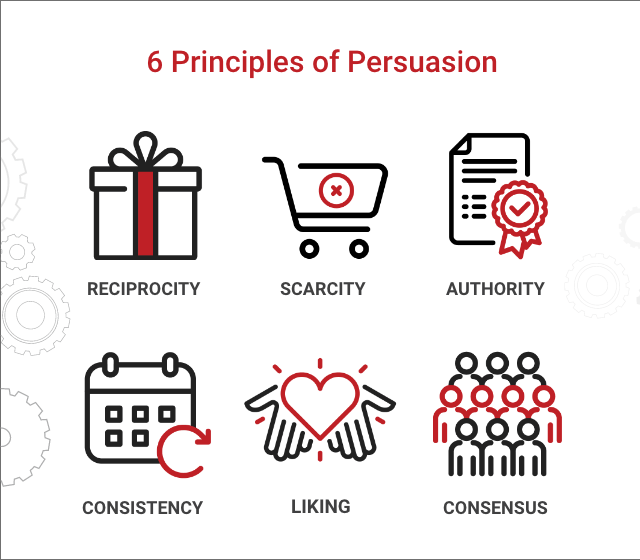
1. Scarcity: The Fear of Missing Out (FOMO)
Humans have an innate fear of scarcity. We value things more when they’re rare or dwindling in availability. As an affiliate marketer, you can leverage this by:
- Highlighting limited-time offers
- Emphasizing exclusive deals
- Showcasing products with limited stock
Example: “Only 3 spots left for this life-changing webinar! Don’t miss out on transforming your business forever.”
2. Social Proof: The Wisdom of the Crowd
We’re social creatures who often look to others for guidance on how to behave. Incorporate social proof in your affiliate marketing by:
- Displaying customer reviews and testimonials
- Showcasing social media engagement
- Highlighting the number of satisfied customers
Example: “Join over 10,000 successful entrepreneurs who have used this tool to 10x their productivity!”
3. Reciprocity: The Power of Giving
When someone does something for us, we feel compelled to return the favor. Use this principle by:
- Offering free valuable content (e-books, webinars, tutorials)
- Providing exceptional customer service
- Giving unexpected bonuses with purchases
Example: “Download our free guide on ‘Top 10 Affiliate Marketing Secrets’ and transform your business today!”
4. Authority: Trust the Experts
People tend to follow the lead of credible, knowledgeable experts. Establish authority by:
- Sharing your credentials and experience
- Collaborating with industry experts
- Providing in-depth, valuable content
Example: “As featured in Forbes and Entrepreneur Magazine, our proven system has helped thousands of beginners become six-figure affiliates.”
5. Consistency: The Need for Alignment
Once people take a stand or make a choice, they tend to behave consistently with that commitment. Utilize this by:
- Getting small commitments (email subscriptions, free trials)
- Reminding customers of their past choices
- Aligning your offers with their previous actions
Example: “You’ve already taken the first step towards financial freedom. Now, let’s take your success to the next level with our advanced course.”
Emotional Marketing in Affiliate Programs
While logic plays a role in decision-making, emotions are often the true drivers of consumer behavior. Here’s how to incorporate emotional marketing in your affiliate efforts:
1. Tell Stories
Humans are hardwired to respond to stories. Craft compelling narratives around your affiliate products that evoke emotions and create connections.
Example: Share a personal story of how the product you’re promoting changed your life or solved a significant problem.
2. Use Power Words
Certain words can trigger emotional responses. Incorporate power words like:
- Amazing
- Exclusive
- Guaranteed
- Revolutionary
- Life-changing
Example: “Discover the revolutionary system that’s guaranteed to skyrocket your affiliate commissions!”
3. Appeal to Aspirations
Tap into your audience’s desires and dreams. Show how your affiliate products can help them achieve their goals.
Example: “Imagine waking up to a flood of passive income every morning. Our course makes this dream a reality.”
4. Create a Sense of Belonging
Foster a community around your affiliate products. Make customers feel part of an exclusive group.
Example: “Join our elite circle of high-performing affiliate marketers and access insider strategies.”
Persuasion Techniques for Affiliates
Now that we’ve explored various psychological principles, let’s look at how to weave them into your affiliate marketing strategy:
- Craft Compelling Headlines: Use power words, create urgency, and highlight benefits.
- Optimize Your Call-to-Action (CTA): Make it clear, compelling, and aligned with emotional triggers.
- Leverage Visual Persuasion: Use images and videos that evoke emotions and showcase benefits.
- Personalize Your Approach: Tailor your message to different segments of your audience.
- Use Scarcity and Urgency Ethically: Create genuine limited-time offers without resorting to false scarcity.
- Build Trust Through Transparency: Be honest about your affiliate relationships and product experiences.
Remember, the key to effective persuasion in affiliate marketing is to genuinely understand and address your audience’s needs and desires.
Related: Best Affiliate Marketing Quotes
Frequently Asked Questions
Q: Is it ethical to use psychological persuasion techniques in affiliate marketing?
A: When used responsibly and with the customer’s best interest in mind, psychological persuasion techniques are ethical. The key is to be honest, transparent, and provide genuine value.
Q: How can I identify the emotional triggers of my target audience?
A: Conduct surveys, analyze customer feedback, and engage with your audience on social media. Pay attention to the language they use and the problems they express.
Q: Can these persuasion techniques work for any type of product?
A: While these techniques are universally applicable, their effectiveness may vary depending on the product and target audience. Always test and refine your approach.
Q: How do I balance logic and emotion in my affiliate marketing?
A: Use emotional appeals to grab attention and create desire, then support your claims with logical arguments and concrete benefits to justify the purchase decision.
Q: Are there any risks in using psychological triggers in marketing?
A: Overuse or manipulation of psychological triggers can backfire, leading to distrust. Always use these techniques ethically and in moderation.

Conclusion: The Power of Psychology of Persuasion in Affiliate Marketing
Understanding the psychology of persuasion and consumer behavior is like having a superpower in the world of affiliate marketing. By tapping into the core drivers of human decision-making, you can create more compelling, effective, and ultimately successful affiliate campaigns.
Remember, the goal isn’t to manipulate but to genuinely connect with your audience, understand their needs, and guide them towards solutions that can improve their lives. As you implement these psychological principles and persuasion techniques, always keep the customer’s best interest at heart.
Are you ready to revolutionize your affiliate marketing strategy with the power of psychology? Start by identifying one technique from this guide and implement it in your next campaign. The results might just astound you!
Want to dive deeper into the psychology of persuasion in affiliate marketing? Sign up for our exclusive newsletter where we’ll reveal advanced techniques to skyrocket your conversions. Spots are limited, so reserve yours now!