

In 2024, setting up an online store has become easier than ever, thanks to e-commerce website builders. These platforms offer user-friendly solutions for entrepreneurs looking to sell products or services online without extensive technical knowledge. But with so many options available, how do you choose the best e-commerce website builder for your business?
Selecting the right e-commerce platform is crucial for the success of your online store. It’s not just about features – it’s about finding a solution that aligns with your business goals and growth plans.
In this comprehensive guide, we’ll explore the 10 best e-commerce website builders, comparing their features, pricing, and suitability for different types of online businesses. Whether you’re a small startup or an established brand looking to expand online, this article will help you make an informed decision.
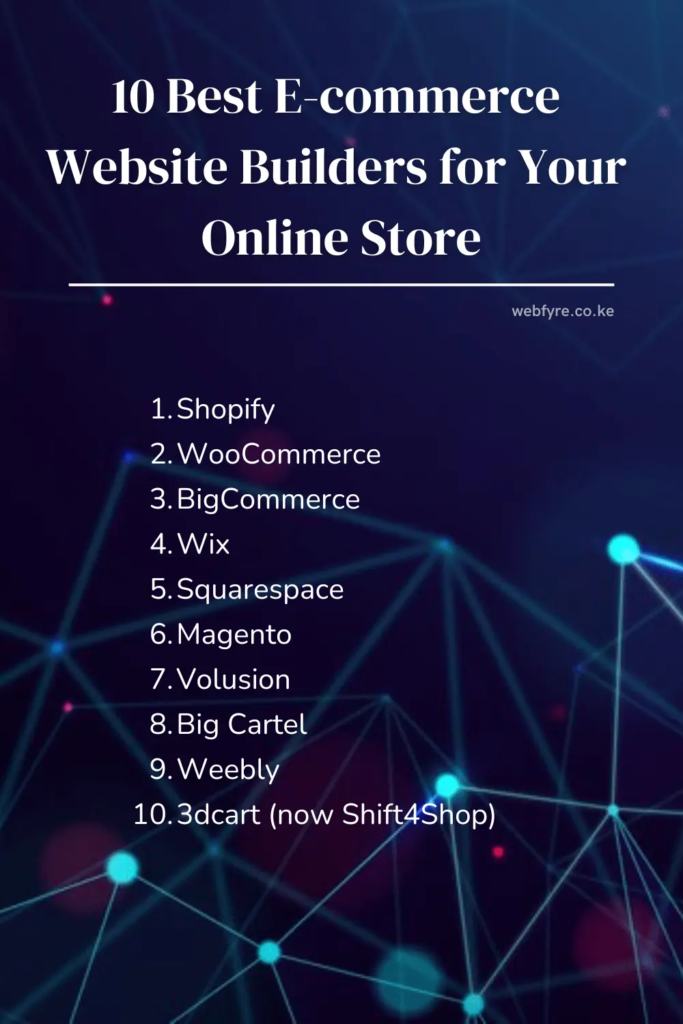
Top 10 E-commerce Website Builders for 2024
Discover the best e-commerce website builders for your online store. Let’s dive into each of these platforms to understand their features, pricing, and ease of use to find the perfect platform for your business.
Table of Contents
1. Shopify
Shopify is one of the most popular e-commerce website builders, known for its ease of use and extensive feature set.
Key Features:
- User-friendly interface
- Extensive app store for additional functionality
- Built-in payment processing (Shopify Payments)
- Multichannel selling capabilities
- 24/7 customer support
Pricing: Plans start at $24/month (Basic Shopify)
Best For: Small to large businesses looking for an all-in-one e-commerce solution
Pros:
- Easy to set up and use
- Robust inventory management
- Excellent customer support
- Large community and ecosystem
Cons:
- Transaction fees for external payment gateways
- Advanced features can be costly with apps
Shopify’s strength lies in its balance of simplicity and scalability. It’s a great choice for businesses of all sizes.
2. WooCommerce
WooCommerce is a free, open-source e-commerce plugin for WordPress, offering flexibility and customization options.
Key Features:
- Seamless integration with WordPress
- Extensive customization possibilities
- Large selection of themes and plugins
- Self-hosted solution
Pricing: Free plugin (hosting and domain costs apply)
Best For: WordPress users and businesses requiring high customization
Pros:
- Highly customizable
- No transaction fees
- Large community and extensive documentation
- Full control over your data
Cons:
- Steeper learning curve
- Requires separate hosting and security management
WooCommerce is ideal for those who want complete control over their online store and are comfortable with a bit of a technical challenge.
3. BigCommerce
BigCommerce is a robust, scalable platform suitable for fast-growing businesses.
Key Features:
- Strong SEO features
- Multi-channel selling
- Advanced product options and customization
- Built-in features (no need for many apps)
Pricing: Plans start at $29/month (Standard plan)
Best For: Medium to large businesses with complex product catalogs
Pros:
- Scalable for growing businesses
- No transaction fees
- Robust built-in features
- Excellent uptime and performance
Cons:
- Steeper learning curve than some competitors
- Annual sales limits on plans
BigCommerce stands out for its built-in features and scalability. It’s a solid choice for businesses planning significant growth.
4. Wix
Wix offers a user-friendly website builder with e-commerce capabilities, ideal for small businesses and creatives.
Key Features:
- Intuitive drag-and-drop editor
- Wide range of customizable templates
- Wix App Market for additional functionality
- Integrated email marketing tools
Pricing: E-commerce plans start at $36/month (Business Basic)
Best For: Small businesses and individuals new to e-commerce
Pros:
- Easy to use with no coding required
- Flexible design options
- Suitable for various types of online businesses
- Integrated marketing tools
Cons:
- Limited scalability for large inventories
- Can’t switch templates after site creation
Wix is perfect for small businesses or individuals who want to create a visually appealing online store quickly.
5. Squarespace
Squarespace is known for its sleek, professional templates and is popular among creatives and service-based businesses.
Key Features:
- Beautiful, mobile-responsive templates
- Integrated blogging platform
- Built-in marketing and SEO tools
- Seamless content creation features
Pricing: E-commerce plans start at $36/month (Business plan)
Best For: Creatives, service providers, and small product-based businesses
Pros:
- Stunning design templates
- All-in-one platform (website + online store)
- No transaction fees on higher-tier plans
- Strong blogging capabilities
Cons:
- Limited payment gateway options
- Fewer advanced e-commerce features compared to specialized platforms
Squarespace excels in creating visually striking online stores, especially for businesses where aesthetics are crucial.
6. Magento
Magento (now part of Adobe Commerce) is a powerful, open-source e-commerce platform known for its flexibility and scalability.
Key Features:
- Highly customizable
- Robust for large catalogs and high-volume sales
- Strong multi-store capabilities
- Extensive third-party integrations
Pricing: Open-source version is free (hosting and development costs apply), Adobe Commerce (formerly Magento Commerce) pricing is custom
Best For: Large enterprises and businesses with complex requirements
Pros:
- Extremely flexible and scalable
- Strong community and resources
- Suitable for B2B and B2C
- Advanced features and capabilities
Cons:
- Steep learning curve
- Can be expensive to develop and maintain
- Requires technical expertise
Magento is the go-to choice for large businesses needing a highly customized e-commerce solution.
7. Volusion
Volusion is a long-standing e-commerce platform known for its focus on data and analytics.
Key Features:
- Strong inventory management
- Built-in SEO tools
- Comprehensive analytics and reporting
- No transaction fees
Pricing: Plans start at $35/month (Personal plan)
Best For: Data-driven small to medium-sized businesses
Pros:
- Robust reporting and analytics
- Good inventory management features
- All plans include unlimited products
- Responsive customer support
Cons:
- Limited free themes
- No built-in blog functionality
Volusion is excellent for businesses that prioritize data-driven decision-making in their e-commerce operations.
8. Big Cartel
Big Cartel is a simple, artist-friendly platform designed for creators and small inventory businesses.
Key Features:
- Easy to use interface
- Free plan available
- Built-in tools for artists and makers
- Customizable themes
Pricing: Free plan available, paid plans start at $15/month
Best For: Artists, makers, and small-scale sellers
Pros:
- Simple and straightforward to use
- No transaction fees
- Free plan available
- Good for selling at in-person events
Cons:
- Limited features compared to larger platforms
- Product limit even on paid plans
Big Cartel is perfect for artists and small-scale sellers who want a no-fuss platform to showcase and sell their creations.
9. Weebly
Weebly offers a user-friendly website builder with e-commerce capabilities, suitable for small businesses.
Key Features:
- Drag-and-drop editor
- Responsive themes
- App center for additional functionality
- Integrated marketing tools
Pricing: E-commerce plans start at $12/month (Professional plan)
Best For: Small businesses and entrepreneurs new to e-commerce
Pros:
- Easy to use
- Affordable pricing
- Good selection of responsive themes
- Solid blogging features
Cons:
- Limited customization options
- Basic e-commerce features compared to specialized platforms
Weebly is a great starting point for small businesses looking to dip their toes into e-commerce without a significant investment.
10. 3dcart (now Shift4Shop)
3dcart, recently rebranded as Shift4Shop, offers a feature-rich e-commerce platform with a focus on SEO and marketing tools.
Key Features:
- Extensive built-in features
- Strong SEO tools
- Wide range of payment processors
- Unlimited products, bandwidth, and staff accounts
Pricing: Free plan available, paid plans start at $39/month (Basic Store)
Best For: Small to medium-sized businesses looking for a feature-rich platform
Pros:
- Comprehensive feature set out-of-the-box
- No transaction fees
- Strong SEO capabilities
- 24/7 customer support
Cons:
- Steeper learning curve due to extensive features
- Themes can look dated compared to some competitors
Shift4Shop stands out for its extensive feature set and strong SEO tools, making it a solid choice for businesses serious about online growth.
How to Choose the Right E-commerce Website Builder
When selecting an e-commerce website builder, consider the following factors:
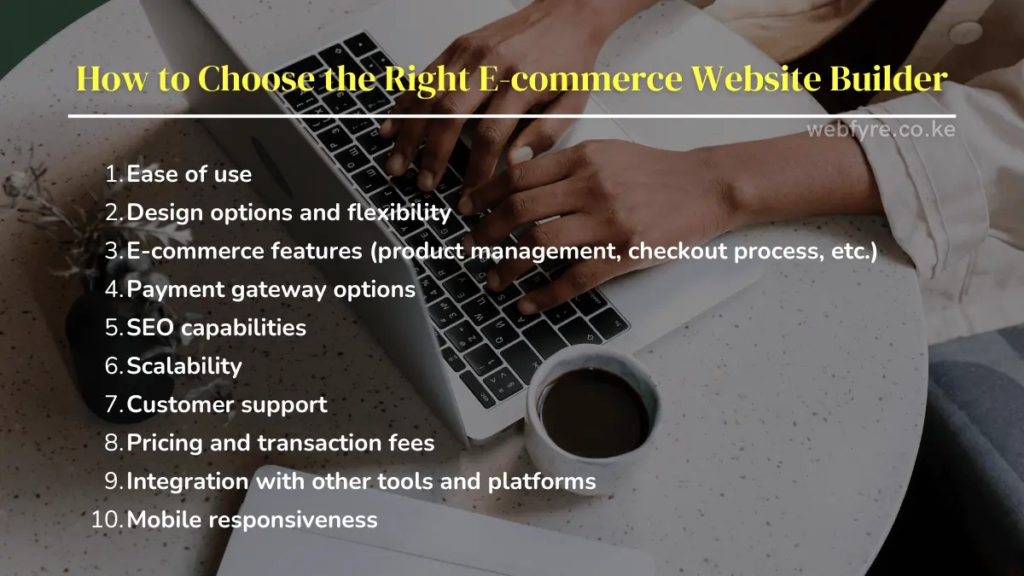
- Ease of use
- Design options and flexibility
- E-commerce features (product management, checkout process, etc.)
- Payment gateway options
- SEO capabilities
- Scalability
- Customer support
- Pricing and transaction fees
- Integration with other tools and platforms
- Mobile responsiveness
Related: The Pros and Cons of Website Builders in 2024
Frequently Asked Questions
Q1: Can I switch e-commerce platforms later if I outgrow my current one?
A: Yes, but it can be challenging. Most platforms offer migration tools, but you may need to rebuild parts of your store.
Q2: Do I need coding skills to use these e-commerce website builders?
A: For most platforms, no coding skills are required. However, knowledge of HTML/CSS can be helpful for customizations.
Q3: Which platform is best for dropshipping?
A: Shopify is often considered the best for dropshipping due to its extensive app ecosystem and ease of use.
Q4: Are there any free e-commerce website builders?
A: Yes, some platforms like WooCommerce and Big Cartel offer free plans, though they may have limitations.
Q5: How important is mobile responsiveness for an online store?
A: Very important. With increasing mobile shopping, having a mobile-responsive store is crucial for success.
Conclusion
In conclusion, choosing the best e-commerce website builder depends on your specific business needs, technical skills, and growth plans. Whether you’re a small artisan business or a large enterprise, there’s a platform that can meet your requirements.
Remember, the success of your online store isn’t just about the platform you choose – it’s also about your products, marketing strategy, and customer service. Which e-commerce website builder are you leaning towards for your online store? Share your thoughts and experiences in the comments below!