


Have you ever found yourself staring at a blank screen, desperately trying to come up with a blog post idea at the eleventh hour? Or perhaps you’ve experienced the frustration of realizing you’ve missed a crucial industry event or seasonal topic because it slipped your mind? If these scenarios sound familiar, you’re not alone. Many bloggers and content creators grapple with the chaos of unplanned content creation.
But what if I told you there’s a way to transform this chaos into a well-oiled content machine? A method that not only eliminates last-minute panic but also enhances the quality and consistency of your blog posts?
As the renowned marketing expert Seth Godin once said, “The art of moving forward lies in understanding what to leave behind.” In the realm of blogging, what we need to leave behind is the haphazard, fly-by-the-seat-of-your-pants approach to content creation. It’s time to embrace the power of strategic planning and organization.
Are you ready to revolutionize your blogging process, boost your productivity, and create content that consistently resonates with your audience? Let’s dive into the world of blog content strategy and discover how to organize and schedule your blog posts like a true professional.
Table of Contents
Content Calendar Planning Benefits
Before we delve into the nitty-gritty of creating and maintaining a content calendar, let’s explore why it’s such a game-changer for bloggers and content creators. A well-planned content calendar is more than just a schedule; it’s the backbone of a successful blog. Here’s why:
- It provides structure and direction to your content strategy
- It helps maintain a consistent publishing schedule
- It allows for better alignment with your overall marketing goals
- It facilitates better resource allocation and time management
- It enables you to plan for seasonal topics and industry events in advance
The Bridge Between Ideas and Execution
Content calendar planning acts as a bridge, connecting your creative ideas with practical execution. It helps you:
- Organize your thoughts and content ideas
- Ensure a balanced mix of content types and topics
- Identify gaps in your content strategy
- Collaborate more effectively with team members or guest contributors
- Track your content performance over time
Now that we understand the ‘why’, let’s dive into the ‘how’ of mastering content calendar planning for your blog.
How to Plan a Content Calendar
Unlock the secrets of effective content calendar planning for your blog. Learn expert blog content strategy to streamline your content creation process and boost your blogging success.
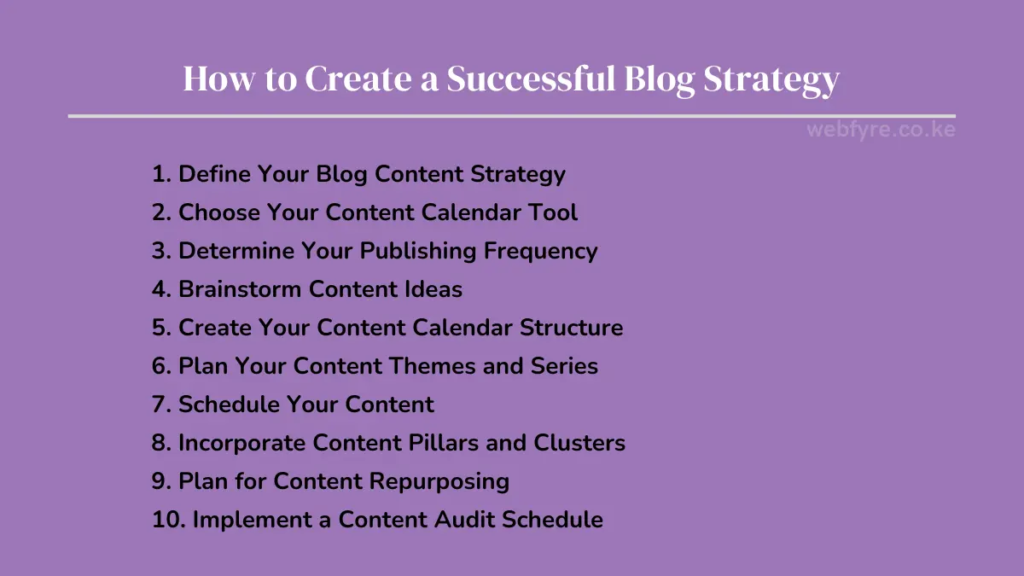
1. Define Your Blog Content Strategy
Before you start filling up your calendar, it’s crucial to have a clear blog content strategy in place.
Key elements of a content strategy:
- Target audience definition
- Content goals and objectives
- Key topics and themes
- Content types (e.g., how-to guides, listicles, case studies)
- Tone and style guidelines
Your content calendar should be a reflection of this strategy, ensuring that every piece of content serves a purpose and aligns with your overall goals.
2. Choose Your Content Calendar Tool
There are numerous tools available for content calendar planning, ranging from simple spreadsheets to sophisticated project management software.
Popular content calendar platforms:
- Google Sheets or Excel (for basic needs)
- Trello (for visual organization)
- Asana (for team collaboration)
- CoSchedule (specifically designed for content marketing)
- Airtable (for customizable database-style planning)
Choose a tool that fits your needs, budget, and team size. The ideal tool should be easy to use, flexible, and accessible to all relevant team members.
3. Determine Your Publishing Frequency
Consistency is key in blogging, but the ideal publishing frequency varies depending on your resources, goals, and audience expectations.
Factors to consider when determining publishing frequency:
- Your capacity to produce quality content
- Your audience’s content consumption habits
- Industry standards and competitor publishing rates
- Your blog’s goals (e.g., SEO, lead generation, thought leadership)
Remember, it’s better to publish high-quality content less frequently than to sacrifice quality for quantity.
4. Brainstorm Content Ideas
With your strategy and publishing frequency in place, it’s time to generate content ideas to fill your calendar.
Effective brainstorming techniques:
- Mind mapping
- Customer pain point analysis
- Competitor content analysis
- Keyword research
- Social media listening
- Team brainstorming sessions
Aim to generate more ideas than you need, giving you a buffer and allowing for flexibility in your content plan.
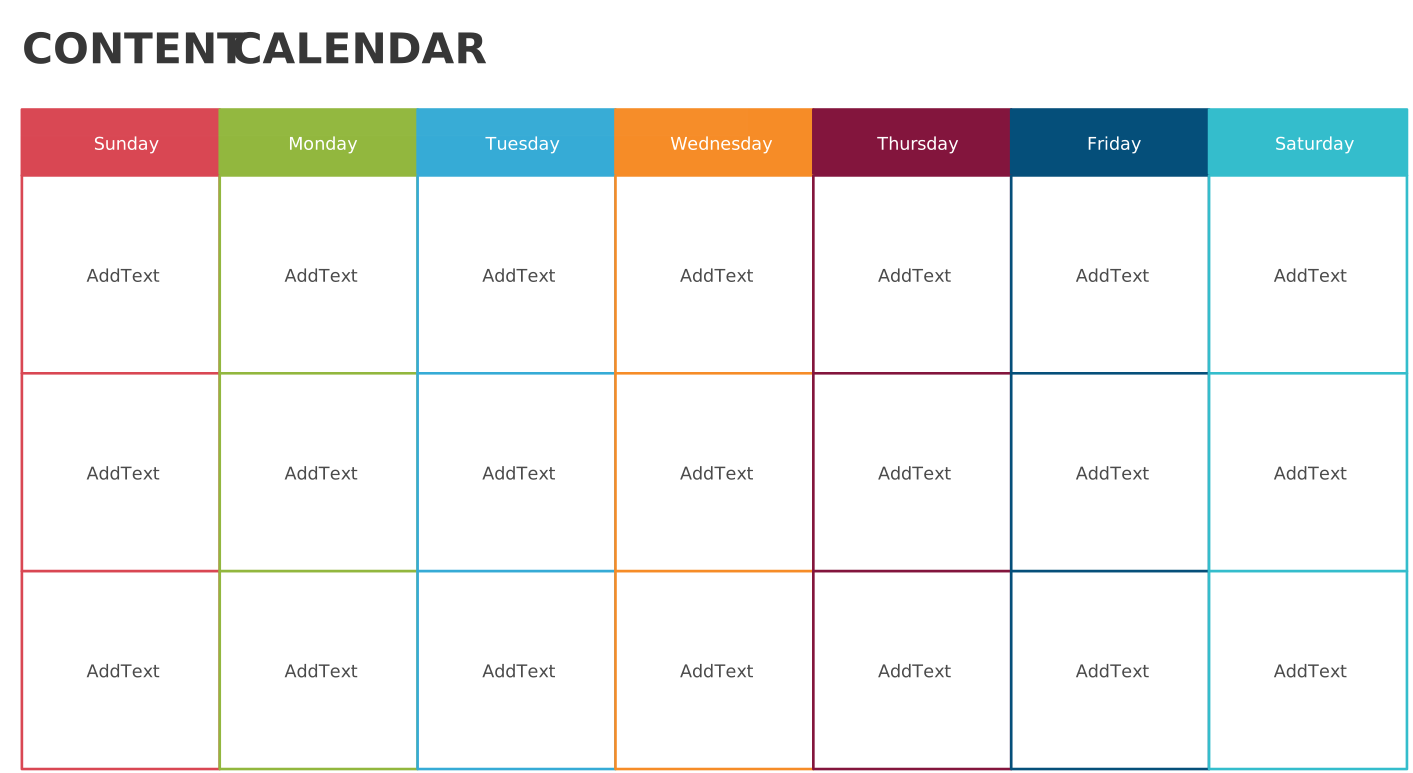
5. Create Your Content Calendar Structure
Now it’s time to set up your actual content calendar. While the exact structure may vary based on your chosen tool, here are some essential elements to include:
- Publication date
- Content title
- Content type (e.g., blog post, video, infographic)
- Target keyword(s)
- Author
- Status (e.g., idea, in progress, ready for review, published)
- Promotion channels
Consider adding columns for additional information such as call-to-action, internal links, or associated campaign.
6. Plan Your Content Themes and Series
Organizing your content into themes or series can help create cohesion in your blog and keep readers coming back for more.
Ways to incorporate themes:
- Monthly focus topics
- Seasonal content
- Multi-part series on complex topics
- Regular featured columns or segments
Planning these themes in advance allows you to create more comprehensive and interconnected content.
7. Schedule Your Content
With your ideas generated and structure in place, it’s time to start filling in your calendar.
Tips for effective content scheduling:
- Balance different content types and topics
- Consider your audience’s routines and peak engagement times
- Plan around important dates, events, and product launches
- Leave room for timely, reactive content
- Schedule content creation and promotion tasks, not just publication dates
Remember to be realistic with your scheduling. It’s better to under-promise and over-deliver than to set unattainable goals.
8. Incorporate Content Pillars and Clusters
Organizing your content around pillar topics and related clusters can boost your SEO and provide a better user experience.
How to implement pillar blog content strategy:
- Identify broad, high-level topics (pillars) relevant to your niche
- Plan a comprehensive piece of content for each pillar topic
- Schedule multiple related blog posts (clusters) that link back to the pillar content
This approach helps establish topical authority and improves your site’s internal linking structure.
9. Plan for Content Repurposing
Maximize the value of your content by planning for repurposing from the start.
Content repurposing ideas:
- Turn a series of blog posts into an ebook
- Create infographics from data-heavy articles
- Develop video scripts based on popular blog posts
- Extract social media snippets from longer content
Including repurposing plans in your content calendar ensures you’re making the most of your content creation efforts.
10. Implement a Content Audit Schedule
Regularly auditing your existing content helps maintain relevance and quality over time.
How to incorporate content audits:
- Schedule quarterly or bi-annual content reviews
- Plan updates for outdated content
- Identify opportunities to improve or expand high-performing posts
- Remove or redirect underperforming or irrelevant content
By planning these audits in advance, you ensure your blog remains fresh and valuable to your audience.
Optimizing Your Content Calendar Process
a) Use Editorial Guidelines
Develop clear editorial guidelines to maintain consistency across your content, especially if working with multiple authors or contributors.
Key elements of editorial guidelines:
- Style guide (e.g., AP Style, Chicago Manual of Style)
- Brand voice and tone specifications
- Formatting requirements
- Image guidelines
- SEO best practices
Include these guidelines in your content calendar tool for easy reference.
b) Implement Workflow Statuses
Use status indicators to track the progress of each piece of content through your production process.
Example workflow statuses:
- Idea
- Outline approved
- First draft
- Editing
- Final review
- Scheduled
- Published
- Promoted
Clear statuses help team members understand where each piece of content stands in the production pipeline.
c) Integrate Analytics and Performance Tracking
Incorporate performance metrics into your content calendar to inform future planning.
Metrics to track:
- Page views
- Time on page
- Social shares
- Conversions
- Backlinks acquired
Use this data to identify successful content types and topics, and adjust your future planning accordingly.
Common Content Calendar Planning Mistakes to Avoid
- Overcommitting: Planning more content than you can realistically produce.
- Ignoring flexibility: Failing to leave room for timely or reactive content.
- Neglecting promotion: Focusing solely on creation without planning for distribution and promotion.
- Siloing your calendar: Not integrating your content calendar with other marketing efforts and campaigns.
- Forgetting to update: Creating a calendar and then neglecting to keep it current.
Leveraging Your Content Calendar for Success
A well-planned content calendar is more than just a scheduling tool; it’s a strategic asset that can drive your blog’s success. Here’s how to make the most of it:
- Use it for team alignment: Ensure all team members understand upcoming content priorities and deadlines.
- Identify content gaps: Regularly review your calendar to spot areas where you may be neglecting important topics or content types.
- Streamline your workflow: Use your calendar to manage tasks, assign responsibilities, and track progress.
- Improve content quality: With more time to plan and prepare, you can create more in-depth, well-researched content.
- Enhance SEO efforts: Plan your keyword targeting and internal linking strategy in advance for better search engine optimization.
Frequently Asked Questions
Q: What are the best tools for content calendar planning?
A: Popular tools include Google Calendar, Trello, Asana, and CoSchedule. Choose one based on your needs and workflow preferences.
Q: How far in advance should I plan my content calendar?
A: Aim to plan at least 3-6 months in advance, but remain flexible for timely topics.
Q: Can I use the same content calendar for different platforms (e.g., blog, social media, email)?
A: While you can use separate calendars, an integrated approach often leads to more cohesive content strategies across platforms.
Q: How often should I review and update my content calendar?
A: Review your calendar weekly for short-term adjustments and monthly for longer-term strategy alignment.
Q: What if I can’t stick to my content calendar?
A: Be realistic in your planning, but if you fall behind, reassess your schedule and adjust as needed. Consistency is key, but quality should not be sacrificed.
Q: How do I balance evergreen content with timely topics in my calendar?
A: Aim for a mix of about 80% evergreen content and 20% timely content, adjusting based on your niche and audience needs.
Conclusion
Mastering content calendar planning is about more than just organizing your blog posts; it’s about strategically aligning your content with your goals, consistently delivering value to your audience, and setting yourself up for long-term blogging success.
By implementing the strategies and techniques we’ve explored, you’re not just creating a schedule – you’re crafting a roadmap for your blog’s growth and impact. With a well-planned content calendar, you’ll find yourself spending less time wondering what to write about and more time creating the high-quality, engaging content that your audience craves.
Remember, your content calendar is a living document. As you grow and learn, don’t be afraid to refine your process and adapt your strategies. The most successful bloggers are those who remain flexible and responsive to their audience’s needs while maintaining a consistent, quality-driven approach to content creation.
What’s your biggest takeaway from this guide? How will you implement these content calendar planning strategies in your blogging journey? Share your thoughts and experiences in the comments below – your insights might just inspire fellow content creators in our community!


