The traditional office cubicle is rapidly becoming a relic of the past. As we navigate through 2026, the global workforce has spoken, and flexibility is no longer just a perk, it is a baseline expectation.
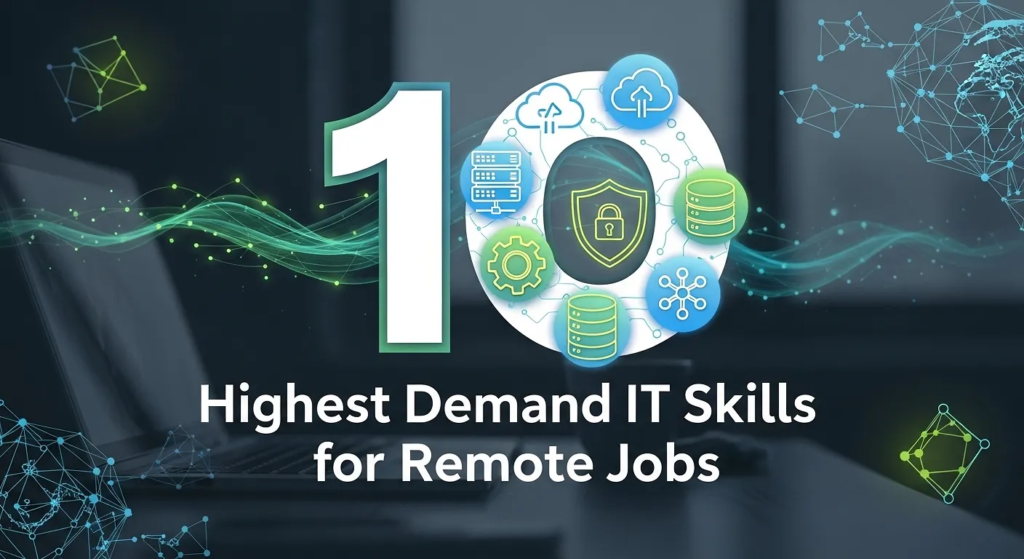
But as the competition for global talent intensifies, landing a lucrative, work-from-anywhere role requires more than just a basic understanding of coding. If you want to future-proof your career, you need to master the highest demand IT skills for remote jobs.
The tech landscape has shifted dramatically over the last few years. The explosive maturation of generative AI, the widespread adoption of zero-trust architecture, and the mainstreaming of edge computing have rewritten the rules of what tech companies are looking for.
Today, companies in the USA, Europe, and beyond are hiring globally, looking for specialized talent that can operate autonomously in decentralized environments.
In this comprehensive guide, we will break down the top tech skills that command the highest remote salaries in 2026, the specific tools you need to learn, and how to position yourself as an irresistible candidate to global tech recruiters.
Table of Contents
The State of Remote Tech Jobs in 2026
Before we dive into the specific skills, we need to understand the current market dynamics. Why are certain skills surging while others plateau?
First, Artificial Intelligence is no longer just a buzzword; it’s an infrastructure. Companies are moving from experimenting with AI to actively deploying agentic AI systems that run their core operations.
Second, the sheer volume of data being processed remotely means that cloud-native architecture and cybersecurity are intricately linked. You cannot have one without the other.
Finally, the remote work environment demands asynchronous efficiency. Employers want engineers, developers, and data scientists who don’t need constant hand-holding. They are looking for “T-shaped” professionals, people who have deep expertise in one specific area but possess a broad understanding of the entire tech ecosystem.
Let’s explore the technical skills that will guarantee your remote employability in 2026 and beyond.
1. Artificial Intelligence Integration & Prompt Engineering
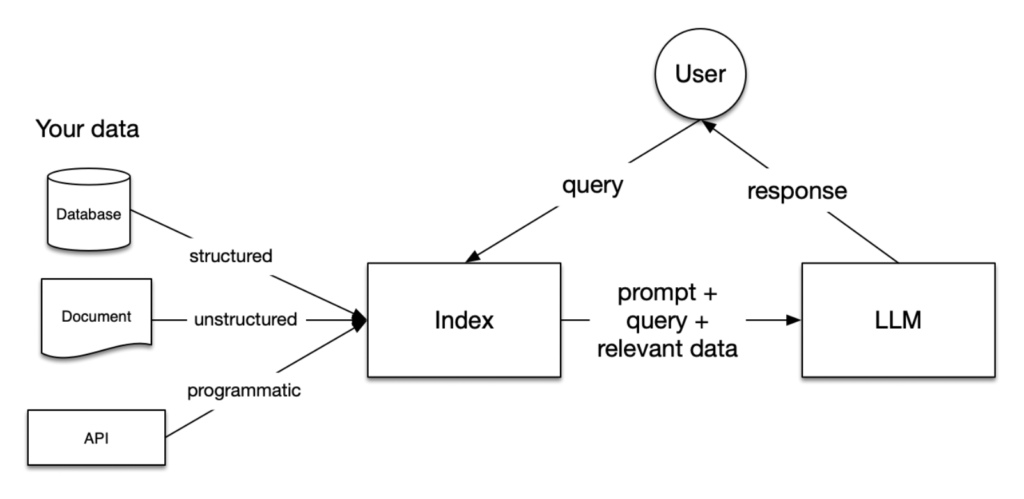
We are well past the era of simply using AI to write emails. In 2026, the most lucrative remote roles involve integrating Large Language Models (LLMs) and specialized AI agents directly into enterprise software.
Why it’s in high demand for remote work:
Companies are racing to build proprietary AI tools for their internal operations and customer-facing products. Because AI development is highly cognitive and heavily relies on cloud infrastructure, it is a naturally remote-friendly field. You don’t need a physical lab; you just need a powerful machine and cloud access.
Specific skills and tools to master:
- LLM Fine-Tuning: Knowing how to take foundational models (like GPT-5, Llama 4, or Claude) and fine-tune them on private company data.
- RAG (Retrieval-Augmented Generation): Building pipelines that allow AI to securely pull data from a company’s internal databases.
- Agentic Frameworks: Mastering frameworks like LangChain, AutoGen, or CrewAI to build autonomous AI agents that can execute complex, multi-step tasks.
- Advanced Prompt Engineering: Structuring system prompts that dictate how AI behaves in commercial software.
Expected Remote Salary (US Market):
$130,000 – $210,000+ per year.
2. Cloud-Native Architecture and FinOps
Cloud computing is the backbone of the remote work revolution. However, knowing how to spin up an AWS EC2 instance is no longer enough. The 2026 focus is on Cloud-Native Architecture and FinOps (Financial Operations).
Why it’s in high demand for remote work:
As companies scaled their cloud usage over the past few years, their cloud bills skyrocketed. Today, organizations are desperate for remote cloud architects who can design serverless environments that are incredibly fast but also cost-efficient.
Remote cloud engineers who can audit a system and slash AWS or Azure bills by 30% are worth their weight in gold.
Specific skills and tools to master:
- Kubernetes (K8s) & Containerization: The absolute standard for deploying applications.
- Serverless Computing: AWS Lambda, Google Cloud Functions, and Azure Functions.
- Infrastructure as Code (IaC): Deep knowledge of Terraform, Pulumi, and Ansible.
- FinOps Tools: Mastery of cloud cost management platforms to optimize resource allocation dynamically.
Expected Remote Salary (US Market):
$120,000 – $180,000+ per year.
3. Advanced Cybersecurity & Zero-Trust Implementation
With a globally distributed workforce, the traditional corporate firewall is dead. In 2026, the standard is Zero-Trust Architecture, the philosophy of “never trust, always verify.” Cybersecurity professionals are the highest-priority hires for enterprise companies operating remotely.
Why it’s in high demand for remote work:
Cyber threats have become highly sophisticated, often driven by rogue AI. Protecting a remote workforce means securing endpoints scattered across the globe. Cybersecurity analysts, penetration testers, and security engineers can monitor networks, run vulnerability scans, and patch systems from anywhere on the planet.
Specific skills and tools to master:
- Zero-Trust Network Access (ZTNA): Implementing identity-based security protocols.
- Cloud Security Posture Management (CSPM): Securing multi-cloud environments.
- AI-Driven Threat Hunting: Using machine learning algorithms to detect anomalies in network traffic before a breach occurs.
- Identity and Access Management (IAM): Advanced deployment of tools like Okta, Ping Identity, or Azure AD.
Expected Remote Salary (US Market):
$115,000 – $195,000+ per year.
4. Data Engineering and Real-Time Analytics
Data is only valuable if it can be accessed and understood in real-time. Data Scientists analyze data, but Data Engineers build the plumbing that makes that analysis possible. In 2026, the volume of data generated by IoT devices, user interactions, and AI systems is astronomical.
Why it’s in high demand for remote work:
Data engineering is highly collaborative but entirely digital. Modern data teams operate asynchronously, using version control and cloud-based data warehouses to build pipelines. It’s a purely remote-friendly discipline that sits at the core of business intelligence.
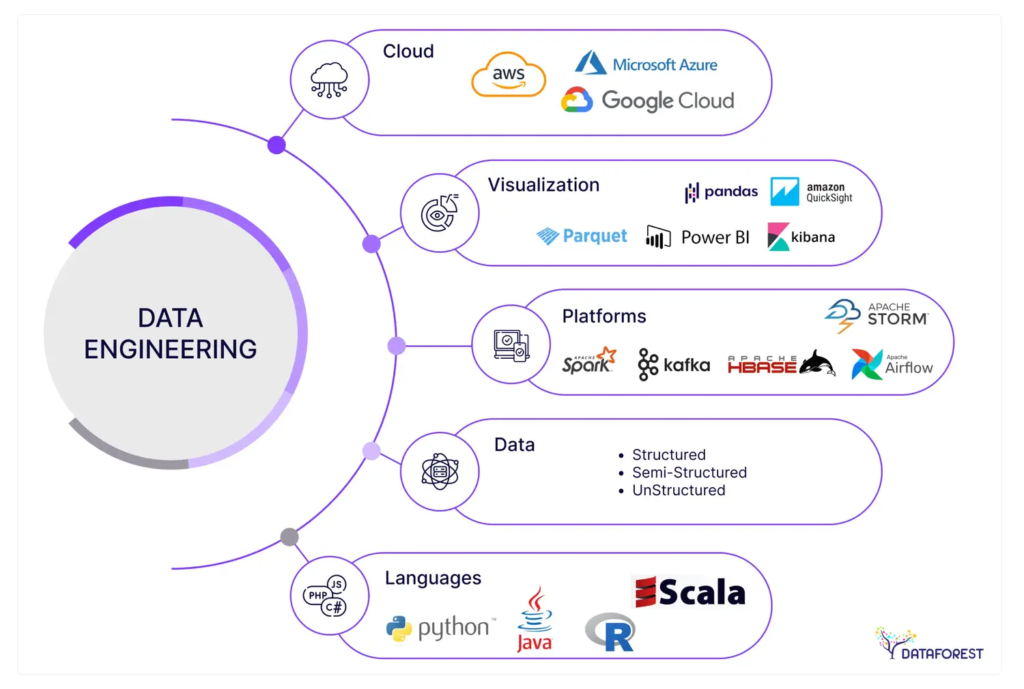
Specific skills and tools to master:
- Data Warehousing & Lakehouses: Snowflake, Databricks, and Google BigQuery.
- Real-Time Stream Processing: Apache Kafka, Apache Flink, and Spark Streaming.
- Data Pipeline Orchestration: Airflow, Dagster, or Prefect.
- SQL & Python: The foundational languages that remain indispensable in 2026.
Expected Remote Salary (US Market):
$125,000 – $185,000+ per year.
5. Platform Engineering and DevOps
DevOps has evolved. While traditional DevOps focused on bridging the gap between development and operations, 2026 is the year of Platform Engineering.
This involves building Internal Developer Platforms (IDPs) so that software engineers can deploy code securely without needing to understand the underlying infrastructure.
Why it’s in high demand for remote work:
When you have hundreds of developers working across different time zones, you cannot rely on manual approvals or bottlenecked IT departments. Platform engineers build automated, self-service portals that keep remote development teams moving at lightning speed.
Specific skills and tools to master:
- CI/CD Pipelines: Advanced automation using GitHub Actions, GitLab CI, or ArgoCD.
- Internal Developer Portals: Backstage (by Spotify) or Port.
- Observability & Telemetry: Datadog, Prometheus, Grafana, and OpenTelemetry to monitor system health remotely.
- Site Reliability Engineering (SRE): Ensuring uptime and managing service level agreements (SLAs).
Expected Remote Salary (US Market):
$135,000 – $200,000+ per year.
6. Full-Stack Development (With an Edge Computing Focus)
The definition of a “Full-Stack Developer” has expanded. It’s no longer just about React and Node.js. In 2026, the highest-paid remote developers are building applications that leverage Edge Computing, processing data closer to the user to reduce latency.
Why it’s in high demand for remote work:
Every company, from e-commerce brands to SaaS startups, needs web and mobile applications. Development is the quintessential remote tech job, with agile methodologies and GitHub making global collaboration seamless.
Specific skills and tools to master:
- Modern Frontend Frameworks: Next.js, Nuxt 3, or SvelteKit.
- Edge Functions & Databases: Cloudflare Workers, Vercel Edge, and distributed databases like Turso or CockroachDB.
- WebAssembly (Wasm): Running high-performance applications directly in the browser.
- API Design: Building robust GraphQL and RESTful APIs to connect microservices.
Expected Remote Salary (US Market):
$100,000 – $170,000+ per year.
7. Blockchain Integration and Web3 Security
After the hype cycles of the early 2020s, Web3 and blockchain technology have matured into stable, enterprise-grade utilities in 2026. Financial institutions, supply chain logistics, and decentralized identity verification systems are heavily relying on blockchain infrastructure.
Why it’s in high demand for remote work:
The Web3 ethos is deeply rooted in decentralization. Because the culture of blockchain companies is inherently remote and distributed, finding an in-office Web3 role is actually harder than finding a remote one.
Specific skills and tools to master:
- Smart Contract Development: Solidity (for Ethereum EVM) and Rust (for Solana and Polkadot).
- Web3 Security & Auditing: Identifying vulnerabilities in smart contracts (preventing multi-million dollar exploits).
- Zero-Knowledge Proofs (ZKPs): Implementing cryptographic methods that prove data is true without revealing the data itself (crucial for privacy in 2026).
Expected Remote Salary (US Market):
$140,000 – $220,000+ per year.
Here are 3 additional high-demand IT skills to expand your guide to a top 10 list. These additions reflect the cutting-edge tech landscape of 2026, perfectly complimenting the first 7 and helping you push that word count closer to your 2,500-word goal while maintaining immense value.
8. Spatial Computing and Mixed Reality (XR) Development
In 2026, we have moved beyond clunky VR headsets into the era of seamless Spatial Computing. Driven by the maturation of ecosystems like Apple’s visionOS and Meta’s enterprise solutions, companies are no longer just building flat 2D applications. They are building immersive, 3D digital environments for e-commerce, remote collaboration, and highly technical training.
Why it’s in high demand for remote work:
Global brands are hiring remote XR (Extended Reality) developers to build virtual storefronts, interactive product demos, and digital twin simulations. Because spatial computing relies entirely on digital asset creation and code, a developer in Nairobi or Austin can build a virtual training simulator for a manufacturing plant in Germany without ever stepping foot on the factory floor.
Specific skills and tools to master:
- 3D Engines: Advanced mastery of Unity and Unreal Engine 5.
- Spatial Frameworks: Apple’s ARKit, visionOS native development (SwiftUI), and Meta’s Presence Platform.
- WebXR: Building augmented and virtual reality experiences that run directly in web browsers without requiring app downloads.
- 3D UI/UX Design: Understanding how users interact with floating interfaces using eye-tracking and hand gestures rather than a mouse.
Expected Remote Salary (US Market):
$110,000 – $180,000+ per year.
9. Green IT and Sustainable Cloud Architecture
As AI models and vast cloud infrastructures consume unprecedented amounts of electricity, 2026 has introduced stringent global regulations around corporate carbon footprints. Green IT Engineer (often falling under the umbrella of “GreenOps”), this is a hybrid role combining cloud architecture, software engineering, and environmental compliance.
Why it’s in high demand for remote work:
Companies are facing heavy fines and ESG (Environmental, Social, and Governance) reporting mandates. They desperately need remote engineers who can analyze their codebases and cloud environments to drastically reduce compute cycles and energy waste. This is a highly analytical, remote-first role where your code optimization directly impacts the planet, and the company’s bottom line.
Specific skills and tools to master:
- Energy-Efficient Programming: Shifting legacy applications to highly performant, low-energy languages like Rust or C++.
- GreenOps Frameworks: Implementing methodologies to measure and reduce the carbon emissions of software.
- Cloud Carbon Tracking: Utilizing tools like AWS Customer Carbon Footprint Tool, Google Cloud Carbon Footprint, or open-source solutions like Cloud Carbon Footprint (CCF).
- Workload Shifting: Designing systems that automatically shift heavy compute tasks to data centers in regions powered by renewable energy during off-peak hours.
Expected Remote Salary (US Market):
$115,000 – $170,000+ per year.
10. Advanced Enterprise Automation and Low-Code Engineering
Not every company needs to build software from scratch. In fact, in 2026, the mantra for many non-tech enterprises is “buy, don’t build.” However, getting dozens of different SaaS apps to talk to each other seamlessly requires a specialized professional: the Enterprise Automation Engineer. This role bridges the gap between traditional coding and low-code platforms.
Why it’s in high demand for remote work:
Businesses are leaner than ever. They want to automate HR onboarding, finance approvals, and marketing pipelines. Automation engineers can map out these complex business workflows and build the digital “connective tissue” entirely remotely.
It’s a perfect role for developers who love solving business logic puzzles without wanting to write millions of lines of boilerplate code.
Specific skills and tools to master:
- Advanced iPaaS (Integration Platform as a Service): Deep expertise in platforms like Make.com, n8n, and Zapier (specifically at the enterprise tier).
- Internal Tool Building: Rapidly developing custom dashboards and admin panels using Retool, Bubble, or Microsoft Power Platform.
- API Architecture: Understanding REST, GraphQL, and Webhooks inside out to force incompatible systems to communicate.
- AI Workflow Integration: Embedding custom LLMs and AI agents into these automated workflows to handle unstructured data (like reading and categorizing incoming PDFs).
Expected Remote Salary (US Market):
$95,000 – $160,000+ per year.
The “Hidden” Requirements: Remote Soft Skills
Having the technical chops is only 50% of the equation. When hiring for remote roles, top tech companies look for specific behavioral traits. If you cannot communicate effectively across time zones, your technical skills won’t save you.
- Exceptional Written Communication: In a remote environment, most communication is asynchronous via Slack, Microsoft Teams, or Jira. You must be able to write clear, concise documentation and articulate complex technical problems in text.
- Autonomous Problem Solving: Remote workers don’t have the luxury of tapping a senior developer on the shoulder every five minutes. You need to be resourceful, relying on documentation, AI coding assistants, and critical thinking to get unstuck.
- Time-Zone Empathy: Understanding how to hand off projects cleanly to colleagues working in Europe or Asia so the workflow continues uninterrupted.
How to Optimize Your Remote Tech Job Search Strategy
Acquiring the highest demand IT skills for remote jobs is the first step. Landing the actual job requires a modern, targeted strategy.
1. Build a “Proof of Work” Portfolio
Degrees matter less in 2026 than they did a decade ago. Employers want to see what you have built. Create a highly active GitHub profile. Contribute to open-source projects. If you are an AI engineer, deploy a live web app that showcases your custom LLM integration. Let your code do the talking.
2. Optimize for Applicant Tracking Systems (ATS)
Remote job postings often receive thousands of global applications within 24 hours. Use AI resume builders to tailor your CV for every specific job description, ensuring you hit the exact keywords recruiters are searching for.
3. Leverage Niche Remote Job Boards
Skip the generic job sites. Focus your search on platforms dedicated to remote tech roles, such as:
- WeWorkRemotely
- RemoteOK
- Wellfound (formerly AngelList – great for startups)
- Turing or Toptal (if you want to freelance for enterprise clients)
Top In-Demand Remote IT Skills (2026)
Looking to land a high-paying remote tech job this year? Here are the top skills you need to learn:
- AI Integration & Prompt Engineering: Fine-tuning LLMs and building agentic AI.
- Cloud-Native & FinOps: Managing Kubernetes and optimizing cloud costs.
- Zero-Trust Cybersecurity: Implementing advanced cloud security and threat hunting.
- Data Engineering: Building real-time streaming pipelines using Kafka and Snowflake.
- Platform Engineering: Creating Internal Developer Platforms (IDPs) and advanced CI/CD.
- Edge Computing Development: Full-stack development utilizing WebAssembly and Edge networks.
- Web3 Security & Smart Contracts: Developing secure blockchain applications using Rust or Solidity.
- Spatial Computing and Mixed Reality (XR) Development
- Green IT and Sustainable Cloud Architecture
- Advanced Enterprise Automation and Low-Code Engineering
Frequently Asked Questions (FAQs)
Q: Do I need a computer science degree to get a remote tech job in 2026?
A: No. While a degree can help bypass some HR filters at legacy companies, modern tech companies and startups prioritize “Proof of Work.” A strong portfolio, active GitHub contributions, and relevant certifications (like AWS Solutions Architect or Certified Kubernetes Administrator) often carry more weight than a traditional degree.
Q: Which IT skill is the easiest for a beginner to learn for remote tech job?
A: Cloud computing and basic Data Analysis (SQL + Python) are generally the most accessible entry points. You can quickly earn foundational certifications (like AWS Cloud Practitioner) to get your foot in the door as a junior cloud support engineer or data analyst.
Q: Will AI replace developer jobs?
A: AI is not replacing developers; developers who use AI are replacing developers who don’t. AI tools like GitHub Copilot and Cursor are significantly speeding up the coding process, meaning employers now expect engineers to be more productive and focus on higher-level architecture rather than writing boilerplate code.
Q: Are remote IT salaries adjusted based on where I live?
A: It depends on the company. Some global tech companies use “location-based pay,” adjusting your salary to the local cost of living. However, an increasing number of startups and Web3 companies in 2026 are adopting “location-agnostic pay,” meaning you get paid the same US-rate salary regardless of whether you live in San Francisco, Nairobi, or Bali.
Conclusion
The future of work is not just remote; it is highly specialized, asynchronous, and driven by continuous learning. By mastering the highest demand IT skills for remote jobs, you are doing more than just looking for employment, you are future-proofing your livelihood.
Whether you choose to dive into the complexities of agentic AI, build unbreakable zero-trust networks, or optimize serverless cloud architectures, the opportunities are boundless. The global market is actively searching for talent. The only question left is: what will you start learning today?