


Have you been dreaming of starting a blog, but don’t know where to begin? Or perhaps you’ve already dipped your toes into the world of blogging, only to struggle with gaining traction and generating revenue. If so, you’re not alone.
The good news is, that with the right strategy and execution, it’s entirely possible to start a profitable blog in 30 days. In fact, the global blogging industry is worth over $400 billion and is expected to grow by 13% annually. This presents a massive opportunity for aspiring bloggers to turn their passions into thriving online businesses.
In this comprehensive guide, we’ll walk you through a step-by-step process to start a profitable blog from scratch and monetize it within a month. Whether you’re a complete beginner or an experienced content creator looking to take your blog to the next level, this actionable plan will equip you with the knowledge and tools you need to succeed.
What are the top 3 most profitable blog niches in 2024?
The top 3 most profitable blog niches are:
- Personal Finance and Investing: The global personal finance market is projected to reach $34.4 billion by 2027, growing at a CAGR of 11.5%. Blogs covering topics like budgeting, retirement planning, investing strategies, and cryptocurrency have significant earning potential through affiliate marketing, advertising, and product sales.
- Health and Wellness: The global wellness industry is valued at over $4.5 trillion and is expected to continue its rapid growth. Blogs focused on fitness, nutrition, mental health, and natural remedies can capitalize on this trend through sponsored content, e-commerce, and online course offerings.
- Online Business and Entrepreneurship: The rise of the gig economy and the increasing number of people seeking to start their own businesses have made online business and entrepreneurship a highly lucrative blog niche. Topics like e-commerce, digital marketing, freelancing, and side hustles can be monetized through affiliate partnerships, consulting services, and digital product sales.
These niches not only have strong market demand and growth potential but also offer a wide range of monetization opportunities for savvy bloggers. By focusing your efforts on one of these high-potential areas, you can set your blog up for long-term success and profitability in the years to come.
A Step-by-Step Guide to Start a Profitable Blog in 30 Days
Discover the proven strategies to start a profitable blog in 30 days. This comprehensive guide covers everything from choosing a profitable niche to driving traffic and monetizing your blog.
So, if you’re ready to turn your dreams into reality and start your journey towards becoming a profitable blogger, let’s dive in!
Table of Contents
Step 1: Choose a Profitable Niche
The first and most crucial step in starting a successful blog is to select a profitable niche. Your niche is the specific topic or area of focus that your blog will revolve around, and it will largely determine your potential for long-term success and monetization.
When choosing your niche, consider the following factors:
- Passion and Expertise: Start by identifying topics that you’re genuinely passionate about and have a deep understanding of. This will not only make the content creation process more enjoyable but will also help you establish credibility and authority in your chosen niche.
- Market Demand: Research the search volume, competition, and commercial intent surrounding your potential niche topics. Look for areas where there is a significant audience actively searching for and willing to pay for the information or solutions you can provide.
- Monetization Potential: Evaluate the various monetization methods, such as affiliate marketing, sponsorships, and product sales, that are most suitable for your niche. Aim for a topic that has a proven track record of generating revenue for other successful bloggers.
- Growth Opportunities: Consider niches that have the potential for expansion and diversification, allowing you to create additional content, products, or services down the line.
Once you’ve identified a few promising niche ideas, conduct thorough market research using tools like Google Trends, Keyword Planner, and SEMrush to validate their viability. This will help you make an informed decision and choose a niche that aligns with your passions, skills, and earning potential.
Related: 15 Most Profitable Blogging Niches to Explore in 2024
Step 2: Set Up Your Blog Infrastructure
With your niche selected, it’s time to start building the technical infrastructure of your blog. This includes choosing a domain name, selecting a web hosting provider, and setting up your content management system (CMS).
- Domain Name: Choose a domain name that is relevant to your niche, easy to remember, and available for purchase. Avoid using long, complicated, or hard-to-spell domain names, as they can hinder your branding and search engine optimization (SEO) efforts.
- Web Hosting: Select a reliable and affordable web hosting provider that can accommodate the growth of your blog. Popular options include WordPress.com, Bluehost, GoDaddy, and SiteGround, each offering a range of hosting plans and features.
- Content Management System (CMS): For most beginner bloggers, we recommend using a CMS like WordPress, which powers over 40% of all websites on the internet. WordPress offers a user-friendly interface, a vast library of plugins and themes, and extensive customization options to help you build a professional-looking blog.
- Design and Branding: Choose a clean, visually appealing theme for your blog that aligns with your niche and target audience. Customize the design, colors, and logo to create a cohesive brand identity that will help you stand out in the crowded blogosphere.
- Essential Plugins: Install a suite of essential plugins to enhance the functionality and user experience of your blog. This may include plugins for SEO optimization, social sharing, email opt-ins, and analytics.
By completing these initial setup tasks, you’ll have a solid foundation to start publishing high-quality content and attracting your first wave of readers.
Step 3: Create a Content Plan
Now that your blog’s infrastructure is in place, it’s time to start planning and creating your content. The key to building a successful, profitable blog is to consistently publish valuable, informative, and engaging content that resonates with your target audience.
Begin by conducting thorough keyword research to identify the topics, questions, and pain points that your potential readers are searching for. Use tools like Google Keyword Planner, Ahrefs, and AnswerThePublic to uncover valuable long-tail keywords and content ideas.
Next, create an editorial calendar that outlines your content creation and publishing schedule for the next 30 days. Aim to publish at least 2-3 high-quality blog posts per week, focusing on a mix of evergreen content (timeless topics) and timely, trending content.
When crafting your blog posts, keep the following best practices in mind:
- Attention-Grabbing Titles: Craft captivating, click-worthy titles that clearly communicate the value and benefits of your content.
- Engaging and Informative Copy: Write in a conversational, easy-to-read style that educates, entertains, and inspires your readers.
- Optimized for Search Engines: Incorporate your target keywords naturally throughout the content, meta tags, and image alt text to improve your blog’s SEO.
- Visual Elements: Enhance your blog posts with relevant, high-quality images, infographics, and videos to break up the text and make the content more visually appealing.
- Actionable Takeaways: Provide your readers with practical, actionable tips and strategies that they can immediately implement in their own lives or businesses.
By developing a consistent content plan and focusing on creating value for your target audience, you’ll be well on your way to building a loyal readership and establishing yourself as an authority in your niche.
Step 4: Promote and Grow Your Blog
Once you’ve published your initial batch of blog posts, it’s time to shift your focus to promoting your content and growing your audience. Effective promotion is crucial for driving traffic, building brand awareness, and, ultimately, monetizing your blog.
Start by leveraging the power of social media to reach your target audience. Create accounts on platforms like Facebook, Twitter, Instagram, and LinkedIn, and use them to share your blog posts, engage with your followers, and participate in relevant discussions.
Additionally, consider the following strategies to amplify your blog’s reach:
- Guest Posting: Reach out to other reputable blogs in your niche and offer to contribute guest posts. This can help you tap into new audiences, build backlinks, and enhance your credibility as an industry expert.
- Collaborations and Influencer Outreach: Partner with complementary businesses, creators, or industry influencers to cross-promote your content and access their established audiences.
- Email Marketing: Build an email list of your blog’s subscribers and regularly send them updates, exclusive content, and offers. Email marketing can be a powerful tool for driving traffic, nurturing leads, and generating revenue.
- Search Engine Optimization (SEO): Optimize your blog’s content, technical setup, and off-site factors to improve its visibility and ranking in search engine results. This can help you attract a steady stream of organic traffic over time.
- Paid Advertising: Experiment with platforms like Google Ads, Facebook Ads, or LinkedIn Ads to reach a targeted audience and drive immediate traffic to your blog.
As you continue to publish high-quality content and implement a diverse range of promotion strategies, you’ll start to see your blog’s traffic and engagement grow. This, in turn, will set the stage for the final step: monetizing your blog.
Related: 50+ High-Quality Guest Posting Sites List for 2024
Step 5: Monetize Your Blog
The ultimate goal of starting a blog is to turn it into a profitable, sustainable online business. And with the right monetization strategies in place, you can start generating revenue from your blog in as little as 30 days.
Here are some of the most effective ways to monetize your blog:
- Affiliate Marketing: Partner with relevant brands and companies to promote their products or services on your blog. Every time a reader clicks on your affiliate link and makes a purchase, you’ll earn a commission.

- Sponsored Content: Reach out to businesses in your niche and offer to create sponsored blog posts, product reviews, or influencer-style content in exchange for a fee.
- Display Advertising: Integrate display ads, such as those from Google AdSense or Media.net, onto your blog and earn a share of the revenue generated by these ads.
- Digital Product Sales: Create and sell your own digital products, such as ebooks, courses, templates, or software, to your blog’s audience.
- Service Offerings: Leverage your expertise and offer services like consulting, freelance writing, or virtual assistance to your readers.
- Membership or Subscription Model: Offer exclusive content, community features, or premium tools behind a paywall to generate recurring revenue from your most engaged fans.
As you start implementing these monetization strategies, be sure to track your progress and performance using web analytics tools like Google Analytics. This will help you identify which revenue streams are most effective and allow you to optimize your efforts accordingly.
Remember, building a profitable blog is a marathon, not a sprint. It will take time, dedication, and ongoing optimization to find the right mix of monetization methods that work best for your niche and audience. But by following the steps outlined in this guide, you’ll be well on your way to launching a successful, money-making blog in just 30 days.
How often should I publish new blog posts?
The optimal publishing frequency for your blog will depend on your resources, content production capabilities, and the competitiveness of your niche. However, a general best practice is to aim for 2-3 high-quality blog posts per week, at minimum.
Consistency is key when it comes to building a successful blog. Posting new content on a regular schedule helps you establish a loyal readership, improve your search engine rankings, and maintain momentum in your content marketing efforts.
As your blog grows, you can experiment with increasing your publishing frequency or diversifying your content formats (e.g., adding videos, podcasts, or infographics) to keep your audience engaged and attract new visitors.
In Conclusion
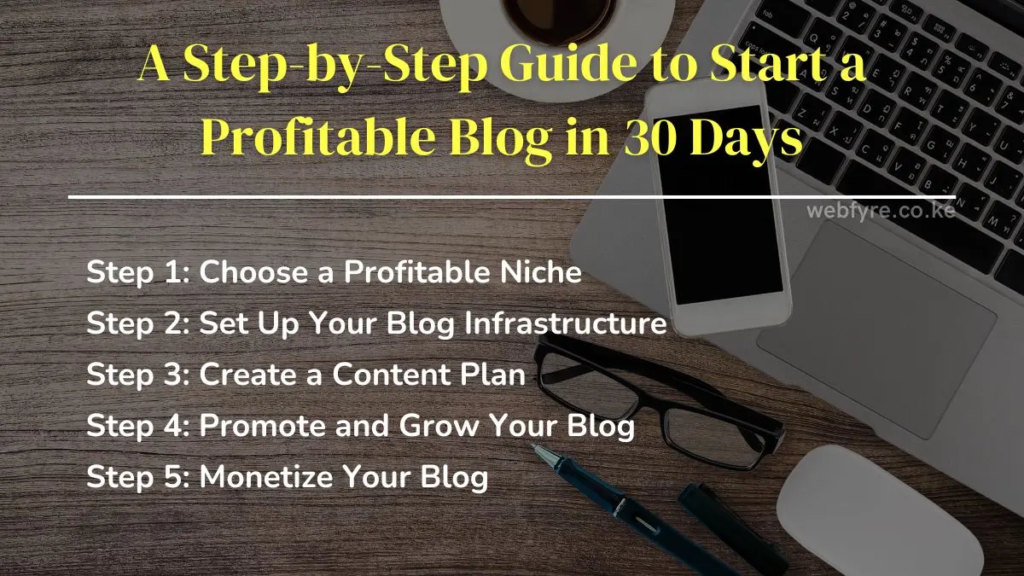
Starting a profitable blog may seem like a daunting task, but with the right plan and execution, it’s entirely achievable within a 30-day timeframe. By following the steps outlined in this comprehensive guide – from choosing a profitable niche to creating a content plan, promoting your blog, and monetizing your efforts – you’ll be able to lay the foundation for a thriving online business.
Remember, the key to success in the world of blogging is to focus on providing immense value to your target audience. When you consistently create high-quality, informative content that speaks directly to the needs and pain points of your readers, the monetization opportunities will naturally follow.
So, what are you waiting for? It’s time to turn your passion into profit and start your journey towards becoming a successful, profitable blogger. Good luck!


